Product Description
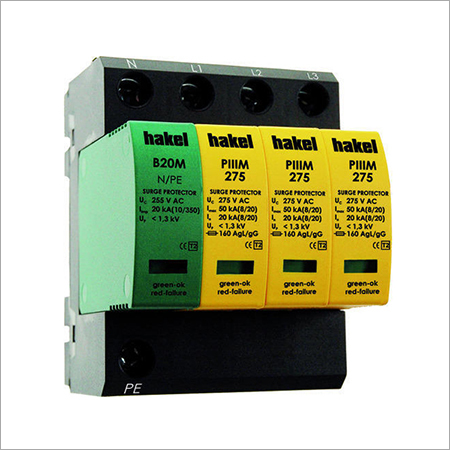
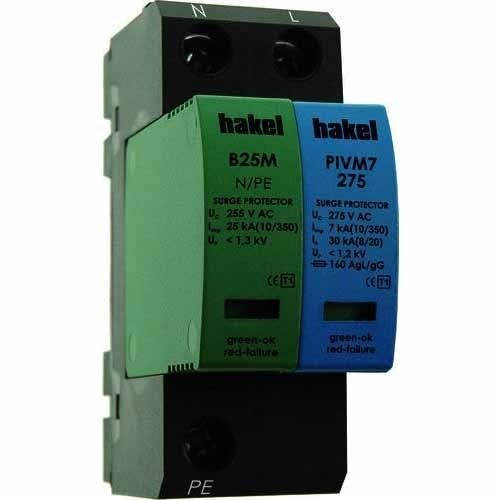
Type 2 / Class II / Class C Surge Arrester is PIIIM in accordance to EN 61643-11 and IEC 616431. Entire device comprises base part and pluggable module. The application of the arrester is in the Lightning Protection Zones Concept at the LPZ 1-2 boundaries (in accordance to IEC 1312-1 and EN 62305) for the purpose of equipotential bonding and removal of transient over voltage that arises during atmospheric discharges or switching processes. PIIIM together with B20M can be used in TNS and TT systems.
The design of latest Type 2 / Class II / Class C Surge Arrester has set new standards with regard to user friendliness and safety. PIIIM series type 2/class II arrester comprises a protective circuit, zinc oxide varistors and a monitoring device for thermal disconnecting control. The base part is properly and strongly fixed by using the pluggable modules. The modules can not be loosen either by vibration during transport or the enormous electromagnetic discharge forces. The modules can be easily replaced during maintenance work without use of any tool; one can simply just pull them out.
Surge arresters with a monitoring device in the varistor are authentic technology with regard to safety. Hakel surge arresters can evaluate discharge current intensity and heavy-duty varistor's surface temperature with Thermal Disconnecting Control mechanism. The proper functioning of all protective circuits and varistors are visually indicated by the green and red indicator flags. In addition, there are three-pole remote signaling terminals (Potential Free Contact). As it has a floating changeover contact, it is possible to use the remote signal as a make or break contact based on the circuit concept.
PIIIM-320 DS/1+1
>> High discharge capacity: Heavy-duty zinc Oxide Varistors/ GDT
>> 2-pole arrester
>> 1-phase power supply network TN-S, TT
>> LPZ1-2
>> I max 50kA
>> M-spare module
>> DS-remote monitor (optional)
Specification
| Maximum continuous operating voltage UC | 275 V AC / 350 V DC |
| Maximum discharge current Imax | 50 kA |
| Voltage protection level Up | 1,3 kV |
| Failure signalisation (S) | green - ok / red - failure |
| Housing material | Polyamid PA6, UL94 V-0 |
| Test class according to EN 61643-11 ed. 2 and IEC 61643-11 | TYP 2, CLASS II |
Advanced Surge Protection for Modern ApplicationsEngineered to safeguard equipment from damaging voltage spikes, this arrester is ideal for sensitive devices in industrial and residential locations. Its high discharge capacity and reliable response time provide exceptional security for electrical infrastructures sensitive to transient surges.
Effortless Maintenance and MonitoringEnjoy simple cartridge replacement and an intuitive end-of-life indicator, minimizing downtime and maximizing preventive maintenance. The optional signalling contact allows remote fault indication, streamlining system oversight and enhancing operational efficiency without manual checks.
Intelligent Design for Harsh EnvironmentsConstructed from thermoplastic and metal, the surge arresters matte finish and IP20 rating support indoor installations in demanding conditions. It resists vibration and extreme temperatures, ensuring consistent performance while its UL 94-V0 flame retardance adds a vital safety layer.
FAQs of Type 2 Class II Class C Surge Arrester:
Q: How does the Type 2 Class II Surge Arrester protect my electrical system?
A: The surge arrester safeguards electrical installations by diverting excess voltage from lightning or power surges directly to earth. With a discharge current capacity up to 40 kA and sub-25 ns response time, it rapidly neutralizes surges to prevent equipment damage.
Q: What is the process for replacing the cartridge in this surge arrester?
A: When the end-of-life indicator signals, power off the supply and follow the manufacturers instructions to replace the cartridge. Its modular design enables quick, tool-free maintenance to ensure continuous surge protection and minimal system interruption.
Q: When should I consider installing this surge arrester in my facility?
A: It is recommended to install the arrester during initial system setup or upgrading electrical infrastructure, particularly in environments prone to surges or lightning. Early installation protects equipment and reduces costly downtime caused by overvoltage events.
Q: Where is the ideal location for mounting this device?
A: Designed for indoor use, the surge arrester is best installed on DIN rails within distribution boards or near entry points of power lines to ensure maximum surge protection for downstream electrical circuits.
Q: What benefit does the optional signalling contact provide?
A: The optional signalling contact enables remote fault indication, allowing facilities managers to monitor surge arrester status and receive instant notifications of faults. This improves maintenance planning and reduces the risk of undetected protection failures.
Q: How is vibration resistance beneficial for this surge arrester?
A: Vibration resistance ensures the surge arrester maintains stable performance even in environments with mechanical movement, like industrial premises. It prevents loosening of components, thereby sustaining reliable surge protection over time.
 Send Inquiry






 English
 Spanish
 French
 German
 Italian
 Chinese (Simplified)
 Japanese
 Korean
 Arabic
 Portuguese


 Send Inquiry